It’s Not Too Late: Why Late Summer Is a Great Time to Start Your Outdoor Living Space
HARDSCAPE GUIDE: By Defining Lines Landscape & Hardscape | Serving Southern Maine
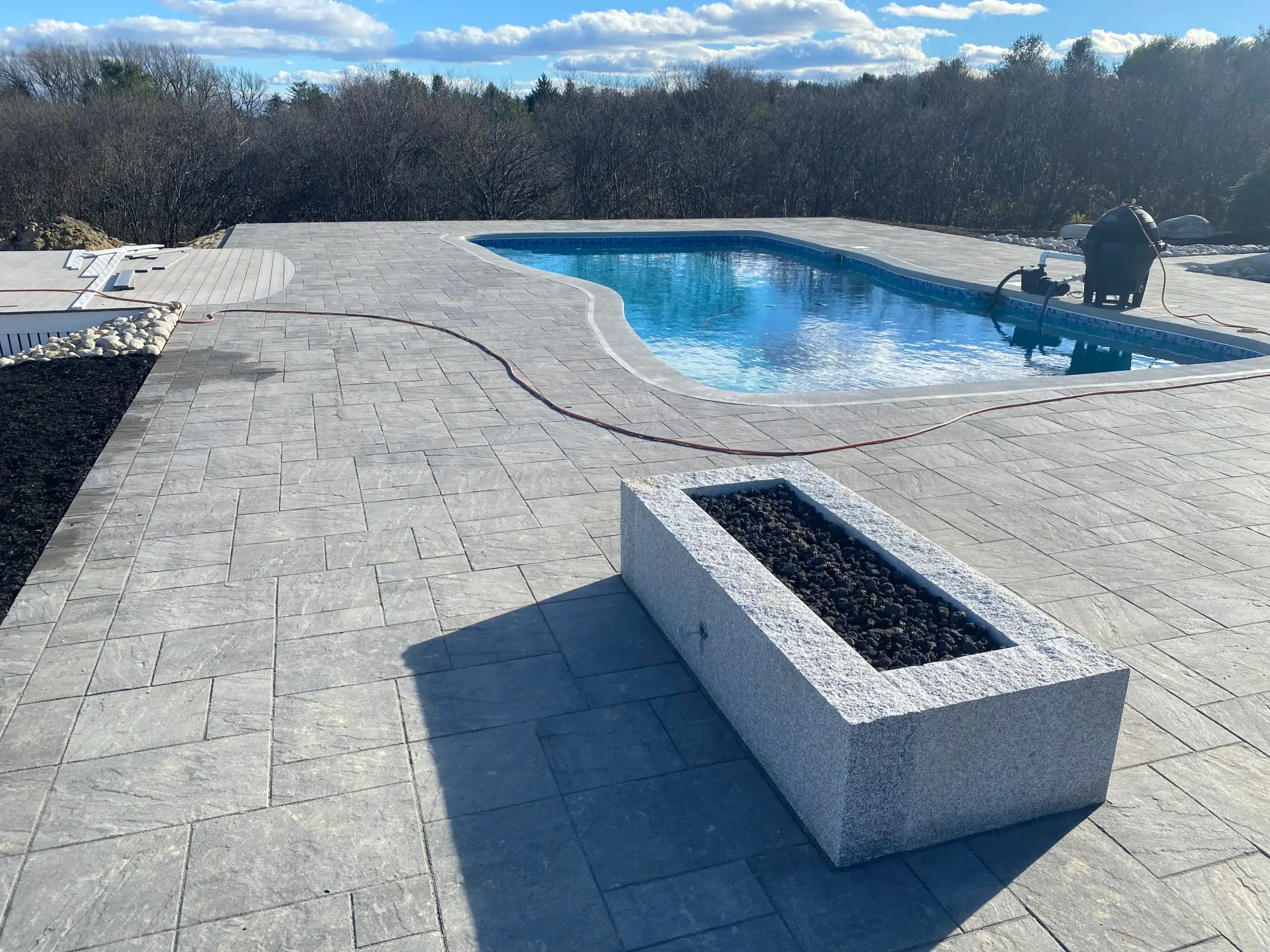
How to Plan a Pool Patio That Survives Maine Winters
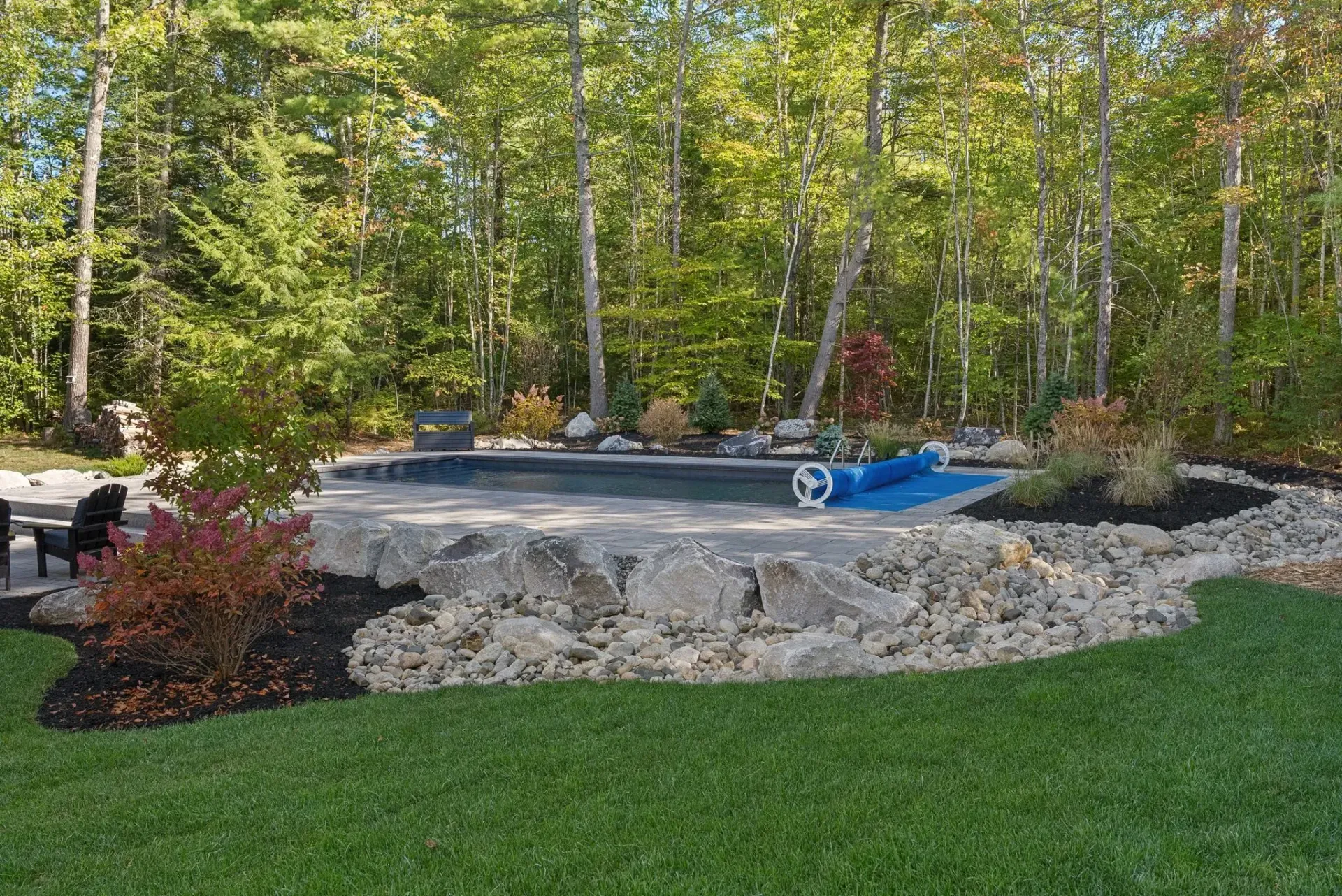
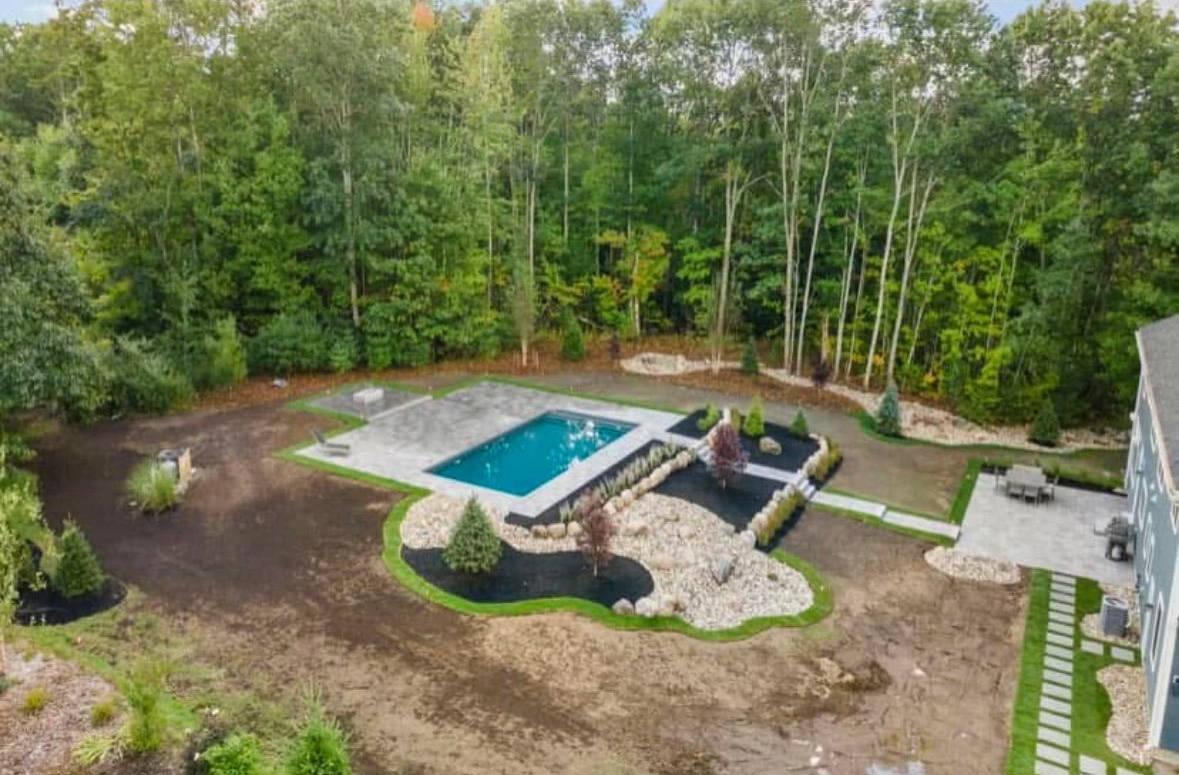
You've invested in a pool. Now you want the patio around it to match — a space that looks beautiful, functions well during swim season, and holds up through everything Maine throws at it from October through April.
That last part is where most pool patio projects go wrong. A patio built without Maine winters in mind can heave, crack, shift, and deteriorate within a few seasons, turning what should be a long-term investment into a recurring headache. At Defining Lines Landscape & Hardscape, we've built pool patios across Southern Maine that continue to perform years later. Here's what it takes to do it right.
Why Pool Patios Are Uniquely Challenging in Maine
A pool patio faces a combination of stresses that most other hardscape projects don't.
Freeze-thaw cycling at the pool edge. The area immediately surrounding a pool experiences constant moisture — splash-out, humidity, and rain pooling against the coping. That moisture works into every joint, crack, and porous surface. In winter, it freezes, expands, and slowly destroys materials and joints that weren't built to handle it.
Snowmelt and drainage. A pool patio covers a large surface area that must shed enormous volumes of snowmelt in spring. If the patio wasn't graded correctly or lacks adequate drainage, that water has nowhere to go except under the patio — where it saturates the base and accelerates heaving.
Pool structure movement. In-ground pools shift slightly with frost and ground movement. The patio immediately adjacent to the pool needs to accommodate that movement without cracking or separating. This requires careful attention to how coping and patio materials meet the pool structure.
Heavy equipment and foot traffic. Pool patios see concentrated foot traffic, furniture loading, and often equipment like pumps and heaters in close proximity. The base and surface materials need to handle this without settling or cracking.
Choosing the Right Patio Material
Material selection is the single most consequential decision you'll make for your pool patio. In Maine's climate, not all materials are created equal.
Porcelain Pavers
Porcelain has become one of the best options for pool patios in cold climates, and for good reason. It's extremely dense — water absorption is almost zero — which means freeze-thaw cycling has very little to work with. It won't stain from pool chemicals, is slip-resistant when textured for wet applications, and holds its color and surface finish for decades with minimal maintenance.
The tradeoff: porcelain is heavier and harder to cut than concrete pavers, which means installation requires more skill and proper equipment. Done right, it's exceptional. Done poorly, edges chip and cuts are uneven.
Best for: Homeowners who want a modern, low-maintenance finish with premium longevity.
Natural Stone (Bluestone, Granite, Thermal Finish)
Natural stone is beautiful and performs extremely well in Maine when the right varieties and finishes are selected. Bluestone and granite are both excellent choices — dense, frost-resistant, and genuinely stunning around water. The key is specifying a thermal or flamed finish rather than a honed or polished surface, which becomes dangerously slippery when wet.
Avoid limestone and travertine around Maine pools. Both are too porous for our climate and will deteriorate quickly with freeze-thaw exposure.
Best for: Homeowners seeking a natural, high-end aesthetic and willing to reseal periodically.
Concrete Pavers
Quality concrete pavers rated for freeze-thaw applications (look for low water absorption and high PSI ratings) are a durable, versatile option. They come in a wide range of colors, textures, and sizes, making them easy to design with. They're also easier to repair than large-format stone — if a section heaves or a paver cracks, individual units can be reset or replaced without disturbing the whole patio.
Avoid cheap concrete pavers with high water absorption rates. In Maine, they will pit, spall, and deteriorate within a few seasons, especially with exposure to pool chemicals.
Best for: Homeowners who want design flexibility and easier long-term repair.
What to Avoid
Wood decking directly adjacent to a pool deteriorates quickly in the splash zone regardless of species or treatment. If you love the look of wood, consider composite decking — but be aware it still requires proper drainage management underneath.
Stamped concrete is popular in warmer climates but problematic in Maine. The surface sealers required to maintain the look don't tolerate freeze-thaw cycles well, and once the surface starts to scale or crack, repair is difficult and expensive.
Base Preparation: Where Most Projects Fail
The most beautiful surface material will fail quickly if it's sitting on a poorly built base. In Maine, base preparation is everything.
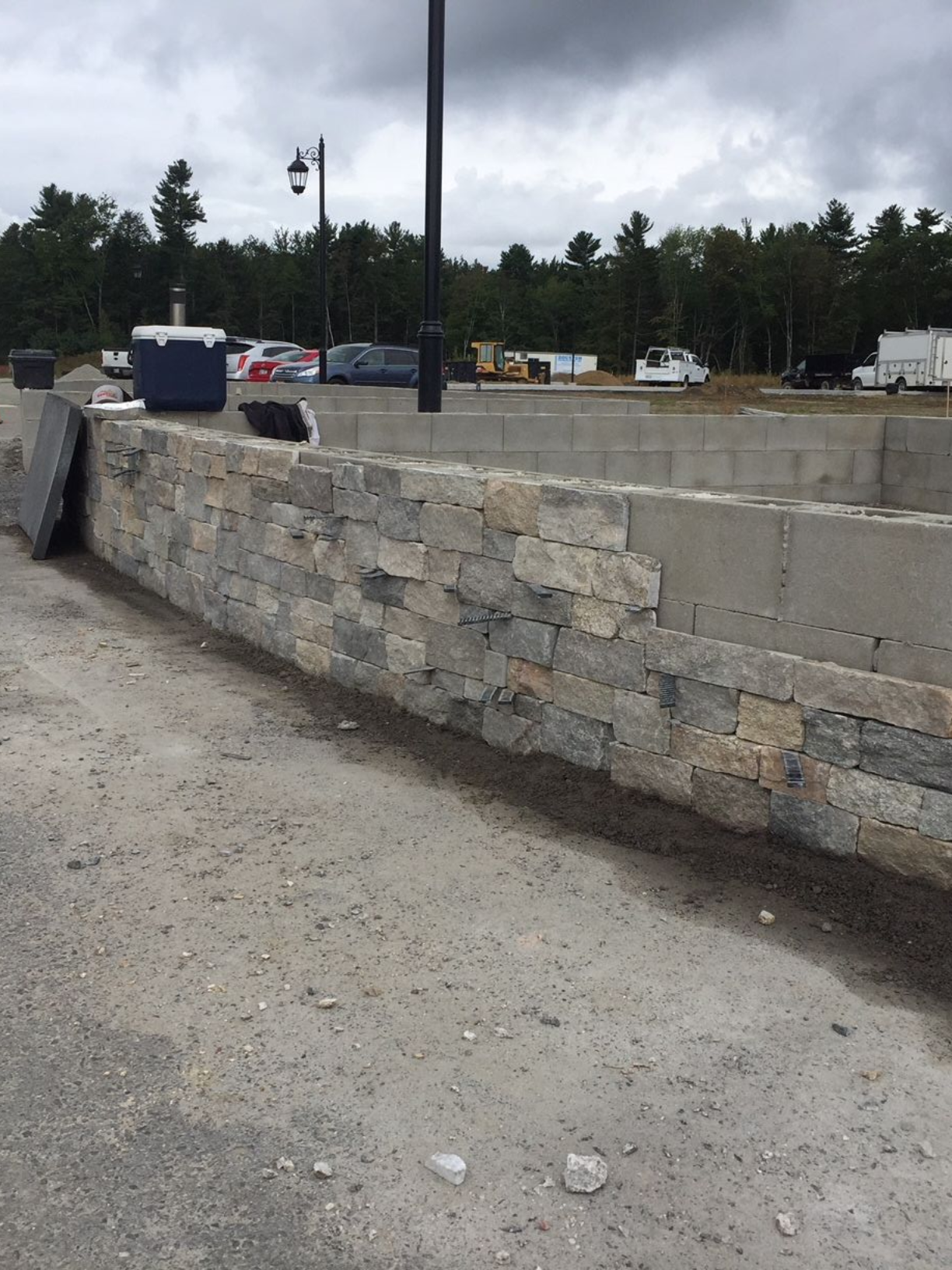
Excavation depth. For a pool patio, we typically excavate 12–18 inches below finished grade — deeper than a standard patio — to get below the frost zone and ensure the base performs through our winters. The specific depth depends on soil conditions and the patio's relationship to the pool structure.
Compacted gravel base. A deep, properly compacted crushed gravel base is what keeps a patio from heaving and shifting. This is not a step to cut corners on. Each lift of gravel needs to be mechanically compacted before the next is added.
Concrete collar at the pool edge. The area immediately adjacent to the pool structure typically requires a concrete bond beam or collar to create a stable transition between the pool shell and the patio. Without this, the joint between pool and patio becomes a crack that opens and grows with every freeze-thaw cycle.
Bedding layer. The material your pavers or stone sits in — typically a layer of coarse sand or stone dust — needs to be correctly specified for the material being used and the drainage conditions of the site.
Drainage: The Most Overlooked Design Element
Proper drainage is where pool patio projects most often cut corners, and where the consequences are most severe.
Slope away from the pool. The patio should be graded to direct water away from the pool — typically with a minimum slope of 1–2%. This keeps pool water from ponding and reduces the amount of surface water working its way into the patio base.
Drainage at the pool coping joint. The joint where the pool coping meets the patio is a natural collection point for water. This joint needs to be detailed carefully — typically with a flexible, pool-grade caulk rather than mortar — to allow movement and prevent water infiltration.
Channel drains or area drains. For larger pool patios or those with significant surface runoff from adjacent lawn or structures, channel drains or area drains integrated into the patio design prevent water from ponding and saturating the base.
Permeable options in lower-traffic zones. In areas away from the pool edge where heavy foot traffic isn't constant, permeable paver systems can allow water to move through the patio surface into a properly prepared base, reducing surface runoff entirely.
Design Considerations for a Functional Pool Patio
Beyond materials and drainage, smart pool patio design makes the space safer, more comfortable, and more enjoyable.
Slip resistance. Every material selected for the pool deck zone — the area within 4–6 feet of the pool edge — should be specified with a slip-resistant finish. This is non-negotiable when it comes to water, and especially important in Maine, where wet surfaces can also be cold.
Coping selection. Pool coping — the capstone that sits on the pool wall and creates the transition to the patio — works hard. It's wet constantly in summer and subject to freeze-thaw stress all winter. Bluestone, granite, and quality precast concrete are all good coping choices for Maine. Cantilevered concrete coping is popular for its clean look, but requires careful installation to ensure it doesn't crack at the overhang.
Furniture zones. Think about where furniture will actually be used and design the patio accordingly. Chaise lounges need a run of open, level surface. A dining or seating area benefits from a slightly separated zone, often one step up from the pool deck, that provides visual definition and prevents wet feet from tracking directly into the dining area.
Equipment access. Pool pumps, heaters, and filters need to be accessible for service. Don't design the patio in a way that buries or blocks this access. A well-planned design integrates equipment areas cleanly rather than treating them as an afterthought.
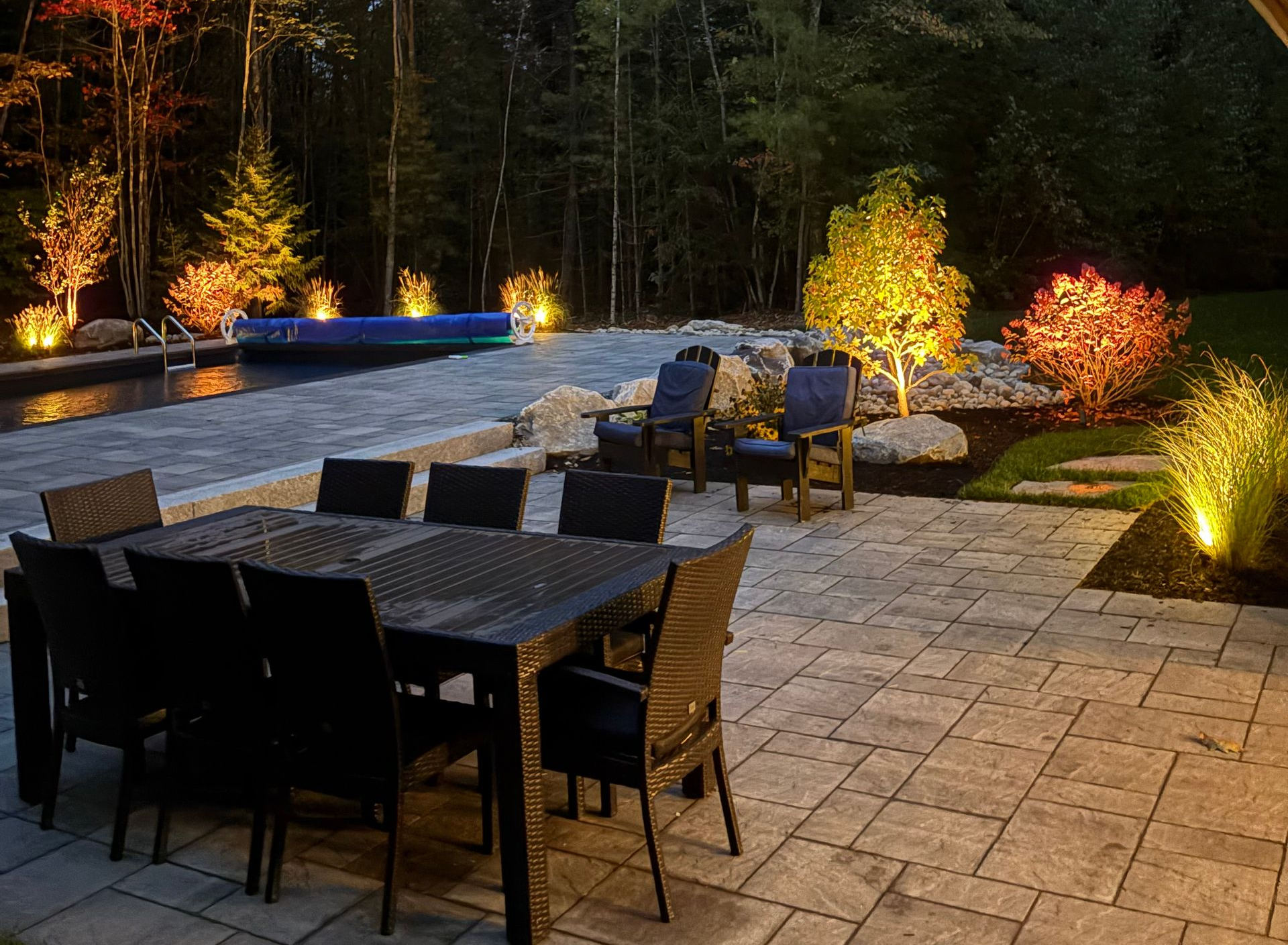
Lighting. A pool patio without lighting loses half its usability. In-paver LED lighting, underwater pool lighting, and perimeter accent lighting extend the pool season into Maine's long summer evenings. Plan conduit runs during construction — adding lighting after the fact is expensive.
Planning for Winter: Protecting Your Investment
A well-built pool patio shouldn't need much winter preparation, but a few practices extend its life.
Remove all furniture, cushions, and accessories before the first hard freeze. Standing water in furniture frames and decorative elements causes damage.
Clear snow from the patio surface promptly. While the patio is built to handle freeze-thaw, standing water from snowmelt that refreezes on the surface creates slip hazards and accelerates wear at joints. Use a plastic snow shovel rather than a metal one to avoid scratching stone or paver surfaces.
Avoid ice melt products containing ammonium sulfate or ammonium nitrate — these are highly corrosive to concrete and stone. Sand or plain rock salt is a safer alternative. Better yet, choose a slip-resistant surface material that minimizes the need for ice melt altogether.
Inspect the coping-to-patio joint each spring. This joint is the first place where it shows up, and catching a minor separation early — before water gets behind the coping — prevents a much larger repair down the road.
Working with the Right Contractor
A pool patio is a significant investment, and in Maine, who builds it matters as much as what materials are specified. Ask your contractor:
- How deep will you excavate, and what's your base specification?
- How do you handle the joint between the pool coping and the patio?
- What drainage plan do you propose for this site?
- What materials do you recommend for Maine's climate, and why?
- Have you completed pool patio projects in Southern Maine, I can see?
A contractor who can answer these questions clearly and specifically — not generically — is one who understands what a Maine pool patio actually requires.
Ready to Build a Pool Patio That Lasts?
At Defining Lines Landscape & Hardscape, we design and build pool patios built for Maine's four seasons — not just for July. If you're planning a pool project or replacing a patio that hasn't held up, we'd love to walk the site with you and talk through what's possible.
Contact us today for a free consultation. 📞 (207) 650-1358 ✉️ defininglines.landscaping@yahoo.com 🌐 defininglinescustomlandscape.com/contact
Serving all of Southern Maine
Would you like the meta description and/or photos for this post?